
Honda VIN Decoder — The Complete Guide for Honda Owners
Everything you need to know about reading, decoding, verifying and trusting a Honda Vehicle Identification Number — for City, Amaze, Elevate, Civic, Accord, CR-V, WR-V, Jazz, BR-V, HR-V, Mobilio, Odyssey, Pilot, City e:HEV and every other Honda model. This guide is written for Indian buyers, sellers, dealers, insurers and fleet operators who want a single, reliable reference for Honda VIN decoding.
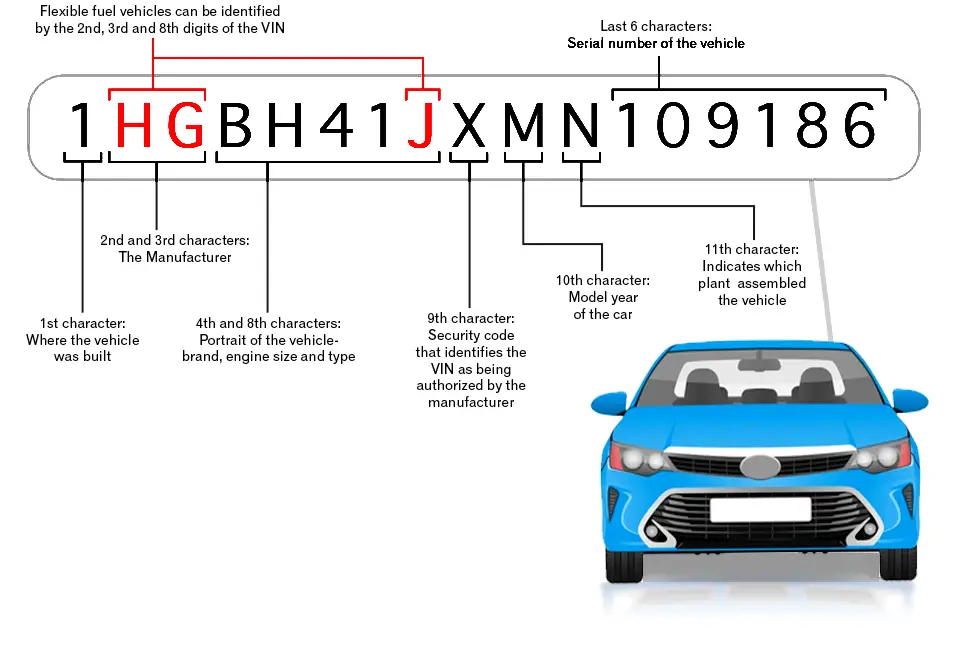
1. What Is a Honda VIN and Why Every Owner Should Know It
A Vehicle Identification Number — universally shortened to VIN — is a unique 17-character alphanumeric code assigned to every motor vehicle at the moment it rolls off the assembly line. Think of it as the vehicle's fingerprint: no two VINs in the world are the same, and once a VIN is assigned to a chassis, it stays with that vehicle for life. In India, the VIN is a legal requirement under the Central Motor Vehicles Rules (CMVR) and is standardised by the international ISO 3779 specification.
For Honda owners — whether you drive a City, Amaze, Elevate, Civic, Accord, CR-V, WR-V, Jazz, BR-V, HR-V, Mobilio, Odyssey, Pilot, City e:HEV or e:Ny1 — the VIN is the single most important identifier used by the RTO, insurance companies, banks, police and the Ministry of Road Transport and Highways (MoRTH) through the VAHAN database.
A Honda VIN is not a random string. Every character carries meaning. The first three characters tell you the country and manufacturer, the middle section encodes the model family, body style, engine family, restraint system and drivetrain, and the last eight characters encode the model year, plant code and sequential production number. Once you understand this structure, you can verify any Honda in under 60 seconds — without paying a single rupee.
2. Anatomy of a Honda VIN — Character-by-Character Breakdown
Every modern Honda VIN follows the same 17-character ISO 3779 structure. Here is the position-by-position breakdown, using a typical Honda City VIN as an example.
| Position | Section | Meaning | Honda Example |
|---|---|---|---|
| 1–3 | WMI | World Manufacturer Identifier — country + maker | MRH = Honda, India |
| 4 | VDS | Vehicle line / model family | Varies by model |
| 5 | VDS | Body style / series | Sedan, SUV, hatchback |
| 6 | VDS | Engine family | i-VTEC, i-DTEC, VTEC Turbo, e:HEV |
| 7 | VDS | Restraint system | Airbags, seat belts |
| 8 | VDS | Drivetrain / trim | FWD, AWD |
| 9 | Check | Check digit that validates the VIN | 0–9 or X |
| 10 | VIS | Model year | See year table below |
| 11 | VIS | Assembly plant code | Greater Noida, Tapukara, etc. |
| 12–17 | VIS | Sequential production number | Unique to that vehicle |
The Three Sections Explained
World Manufacturer Identifier (WMI — characters 1–3): The first three
characters tell you where the vehicle was built and by whom. Honda uses many WMIs
including JHM, JH4 and JHL (Japan),
1HG, 2HG, 3HG, 5FN,
5J6, 7FA and 19X (USA),
SHH (UK - Swindon), and MRH (India - Greater Noida). If a
Honda shows a WMI that is not in this list, either the VIN has been re-stamped
illegally, or the vehicle was built under a joint venture arrangement (e.g., the
former Hero Honda partnership for two-wheelers).
Vehicle Descriptor Section (VDS — characters 4–9): This is the most manufacturer-specific part of the VIN. Honda uses these six characters to encode the model line (City, Amaze, Elevate, Civic, etc.), body style (sedan, hatchback, SUV, MPV), engine family (i-VTEC 1.2L, i-VTEC 1.5L, VTEC Turbo 1.0L, VTEC Turbo 1.5L, i-DTEC 1.5L, e:HEV hybrid), restraint system (airbag count) and drivetrain (FWD or AWD). The 9th character is a mathematical check digit that validates the entire VIN; if a single character is altered, the check digit will fail.
Vehicle Identifier Section (VIS — characters 10–17): The 10th character is the model year — the single most important character for used-vehicle buyers. The 11th character is the plant code. Characters 12–17 are the sequential production serial number. Because Honda produces over 5 million vehicles per year across multiple plants worldwide, this number can go well above 500,000.
3. Honda Model Year Codes — How to Read the 10th Character
The 10th character of a Honda VIN tells you the model year. This is not always the same as the year of registration in India. A car built in December 2024 may be registered in January 2025 — meaning the VIN shows a 2024 model year, but the RC shows a 2025 registration. Always use the VIN's 10th character as the authoritative model year.
| Code | Model Year | Code | Model Year |
|---|---|---|---|
| L | 2020 | M | 2021 |
| N | 2022 | P | 2023 |
| R | 2024 | S | 2025 |
| T | 2026 | V | 2027 |
| W | 2028 | X | 2029 |
| Y | 2030 | 1 | 2031 |
Letters I, O, Q and U are never
used in a VIN to avoid confusion with the digits 1 and 0. If you see them in a "VIN",
the number is either fake or written incorrectly.
4. Where to Find the VIN on a Honda Vehicle
Depending on the model, the VIN on a Honda vehicle can be found in one or more of the following locations. Before you buy any used Honda, physically match the VIN in at least three of these locations.
4.1 Honda Sedans and Hatchbacks (City, Amaze, Civic, Accord, Jazz, WR-V, Brio)
- Windshield lower corner (driver's side): Visible through the glass on all modern Hondas — the fastest way to read the VIN from outside.
- Driver-side door jamb plate: Riveted metal or sticker plate carrying VIN, GVWR and tyre specs — the primary location for RTO verification.
- Firewall in the engine bay: Stamped into the metal on the firewall, usually near the brake master cylinder.
- Engine block: The engine number is stamped separately but usually listed on the RC alongside the VIN.
- Registration Certificate (RC): Always cross-check the VIN printed on the RC against the physical chassis.
4.2 Honda SUVs and Crossovers (Elevate, CR-V, HR-V, BR-V, Pilot, Passport)
- Windshield lower corner: Primary location on all Honda SUVs.
- Driver-side door jamb plate: Carries VIN, GVWR and axle ratings.
- Firewall stamp: In the engine bay, usually near the strut tower.
- Under the front passenger seat (some models): Etched on the floor pan for structural VIN.
4.3 Honda Hybrids and EVs (City e:HEV, Civic e:HEV, Accord e:HEV, CR-V e:HEV, e:Ny1)
- Windshield lower corner: Standard location.
- Driver-side door jamb: Standard location.
- Battery pack frame: A secondary VIN plate on the high-voltage battery enclosure for hybrid and EV models.
- Front motor mount plate: Stamped on the chassis near the electric motor (for EV models).
4.4 Honda MPVs and Vans (Mobilio, Odyssey, Elysion)
- Chassis frame rail: Stamped on the right-hand frame rail near the front axle.
- Cabin door jamb plate: Riveted metal plate with VIN, GVW and axle configuration.
- Engine bay firewall plate: Firewall-mounted plate on most Honda MPVs.
5. Honda Model VIN Reference Table
While the VDS section (characters 4–9) is proprietary to Honda, the following table shows typical WMI + model family combinations you will encounter when decoding Honda vehicles worldwide.
| Model | Typical WMI | Engine Family | Assembly Plant |
|---|---|---|---|
| Honda City (5th Gen) | MRH / JHM | i-VTEC 1.5L / i-DTEC 1.5L / e:HEV | Greater Noida / Tapukara / Japan |
| Honda City e:HEV | MRH | 1.5L Atkinson + 2-motor hybrid | Greater Noida |
| Honda Amaze | MRH | i-VTEC 1.2L / i-DTEC 1.5L | Greater Noida / Tapukara |
| Honda Elevate | MRH | i-VTEC 1.5L | Greater Noida |
| Honda WR-V | MRH | i-VTEC 1.2L / i-DTEC 1.5L | Greater Noida / Tapukara |
| Honda Jazz | MRH / JHM | i-VTEC 1.2L / e:HEV | Greater Noida / Japan |
| Honda BR-V | MRH / MHF | i-VTEC 1.5L / i-DTEC 1.5L | India / Indonesia |
| Honda Civic | JHM / 19X / SHH | 1.5L VTEC Turbo / 2.0L i-VTEC / e:HEV | Japan / USA / UK |
| Honda Accord | JHM / 1HG | 1.5L VTEC Turbo / 2.0L i-VTEC / e:HEV | Japan / USA |
| Honda CR-V | JHL / 5J6 / 7FA | 1.5L VTEC Turbo / 2.0L i-VTEC / e:HEV | Japan / USA / Canada |
| Honda HR-V | 3CZ / JHM | 1.5L / 1.8L i-VTEC / e:HEV | Japan / Mexico / Thailand |
| Honda Pilot | 5FNY / 5FNYF | 3.5L V6 i-VTEC | USA (Alabama) |
| Honda Odyssey | 5FNRL / JHMRA | 3.5L V6 i-VTEC | USA (Alabama) / Japan |
| Honda Mobilio | MHR / MHF | 1.5L i-VTEC / 1.5L i-DTEC | India / Indonesia |
| Honda e:Ny1 | JHM | Electric (68.8 kWh) | Japan / China |
| Honda e (2020–2024) | JHM | Electric (35.5 kWh) | Japan |
6. Decoding Different Honda Models
6.1 Honda City
The Honda City is one of India's most popular premium sedans and Honda's best-selling
model in the country. It carries the WMI MRH (India - Greater Noida and
Tapukara plants) or JHM (Japan). VIN decoding reveals the engine family
(i-VTEC 1.5L petrol, i-DTEC 1.5L diesel, or the e:HEV hybrid with a 1.5L Atkinson
engine and two electric motors), the transmission (6MT, CVT or e-CVT for hybrids), the
drivetrain (FWD only), and the trim level (SV, V, VX, ZX, e:HEV variants). For the
5th-generation City, the VIN also confirms whether the vehicle has Honda SENSING
(ADAS) and the LaneWatch camera.
6.2 Honda Amaze
The Amaze is Honda's sub-4-metre compact sedan, built in India for both domestic and
export markets. It carries the WMI MRH. VIN decoding reveals the engine
family (i-VTEC 1.2L petrol or i-DTEC 1.5L diesel), the transmission (5MT, CVT or
6MT for diesel), and the trim level (E, S, VX, ZX). The 2nd-generation Amaze (2024
onwards) also confirms whether the vehicle has the new Honda SENSING suite.
6.3 Honda Elevate
The Honda Elevate is Honda's mid-size SUV for the Indian market, launched in 2023. It
carries the WMI MRH. VIN decoding returns the engine family (i-VTEC 1.5L
petrol), the transmission (6MT or CVT), the drivetrain (FWD only), and the trim level
(SV, V, VX, ZX). The Elevate also confirms whether the vehicle is equipped with the
Honda SENSING ADAS suite, which is standard on higher variants.
6.4 Honda WR-V and Jazz
Both the WR-V (crossover) and Jazz (hatchback) share the same platform and engine
family (i-VTEC 1.2L petrol and i-DTEC 1.5L diesel). They carry the WMI
MRH. VIN decoding reveals the engine family, transmission (5MT, 6MT or
CVT), and trim level (S, SV, VX, ZX). Both models were discontinued in India in 2023
but remain popular in the used market.
6.5 Honda Civic and Accord
The Civic and Accord are Honda's global flagship sedans. The Civic was sold in India
between 2019 and 2022 (10th generation), while the Accord has been sold on and off
since the 1990s. Both carry WMIs like JHM, 19X,
SHH and 1HG. VIN decoding returns the engine family
(1.5L VTEC Turbo, 2.0L i-VTEC, or e:HEV hybrid), the transmission (CVT, e-CVT or
6MT for the Si/Type R), and the trim level (V, VX, ZX, Sport, Touring, Si, Type R).
6.6 Honda CR-V, HR-V, Pilot
Honda's SUV range spans the compact HR-V, mid-size CR-V and full-size Pilot. These
carry WMIs including JHL, 5J6, 7FA,
3CZ and 5FNY. VIN decoding returns the engine family
(1.5L VTEC Turbo, 2.0L i-VTEC, 3.5L V6 i-VTEC), the drivetrain (FWD or AWD), the
seating configuration (5 or 7-seater), and the trim level (LX, EX, EX-L, Touring).
6.7 Honda Hybrids — City e:HEV, Civic e:HEV, Accord e:HEV, CR-V e:HEV
Honda's e:HEV (Hybrid Electric Vehicle) system is a two-motor hybrid powertrain that primarily drives the wheels with an electric motor, with the petrol engine acting as a generator. It is fundamentally different from Toyota's HSD system. When you decode the VIN of a Honda hybrid, the following fields are typically returned:
- Model: City e:HEV, Civic e:HEV, Accord e:HEV, CR-V e:HEV, Jazz e:HEV
- Engine: 1.5L or 2.0L Atkinson-cycle petrol engine
- Motor: Two-motor system (traction motor + generator motor)
- Battery: Lithium-ion pack (typically 0.7–1.1 kWh)
- System output: 109–184 hp depending on model
- Transmission: e-CVT (electronically controlled, no belts)
- Plant: Determined by WMI
For hybrid buyers, VIN decoding is especially important because hybrid battery health declines with age and mileage — and battery replacement can be expensive. The VIN links to the vehicle's service history, which reveals whether the hybrid battery is still under warranty and whether it has been replaced.
6.8 Honda EVs — e:Ny1 and Honda e
Honda has entered the EV market with the Honda e (city car, sold in Europe and Japan) and the e:Ny1 (compact electric SUV, part of the e:N Series). VIN decoding for these EVs returns:
- Model: e:Ny1, Honda e (and future e:N Series models)
- Battery: 35.5 kWh (Honda e) or 68.8 kWh (e:Ny1)
- Motor: Permanent magnet synchronous, single-motor FWD
- Charging: 7.4 kW AC home charging, 76–78 kW DC fast-charge
- Range: WLTP range as certified
- Plant: Determined by WMI
7. Why a Honda VIN Check Is Essential for Used-Vehicle Buyers
Honda is famous for reliability, which means used Hondas hold their value better than almost any other brand. That popularity also makes them a target for fraud. Honda has one of the strongest residual values in the Indian used-car market, and a Honda with a clean service history can command a premium. A Honda VIN check is the single cheapest protection you can buy against:
- Stolen vehicles: A VIN check against the VAHAN database reveals if a vehicle is reported stolen.
- Odometer tampering: Illegal under Section 182A of the Motor Vehicles Act, 1988. Honda petrol engines are famously long-lasting, which makes high-mileage cars attractive to tamper with.
- Undisclosed accidents: A repairable vehicle (insurance write-off) may look fine but hide structural damage. VIN-linked insurance records expose this.
- Outstanding finance / hypothecation: If a bank or NBFC has a lien on the vehicle, the VAHAN record shows it. Buying such a vehicle without clearing the loan is legally risky.
- Fake registration: Cross-check the VIN on the RC against the physical chassis. If they don't match, walk away.
- Cloned vehicles: Criminals clone a VIN from a legitimate Honda onto a stolen chassis. A proper VIN decode exposes inconsistencies in the plant code, model year or engine family.
- Flood-damaged vehicles: Insurers report flood-damaged vehicles against their VINs. Decoding reveals if the vehicle was written off in a flood.
- Recall status: Honda has issued recalls for various models — typically involving airbag inflators (Takata), fuel pumps, CVT software or hybrid battery management systems. The VIN tells you whether the recall work is completed.
- CVT and hybrid battery integrity: For City CVT, Civic CVT and City e:HEV, the VIN links to the vehicle's service history, which reveals whether the CVT or hybrid battery has been replaced.
- BS6 Phase 2 compliance: The VIN confirms the exact emission standard, which affects resale value and Delhi-NCR registration eligibility.
- Decode the VIN on this page.
- Check the VAHAN portal for registration, insurance and hypothecation.
- Ask for the original RC, insurance and PUC certificate.
- Physically match the VIN on the chassis, door jamb, firewall and RC.
- Take a test drive with a mechanic you trust.
8. Honda Motor Company — The World's Largest Engine Maker
Honda Motor Co., Ltd. is a Japanese multinational conglomerate headquartered in Minato, Tokyo, Japan. Founded in 1948 by Soichiro Honda and Takeo Fujisawa, Honda began as a motorcycle manufacturer and grew into the world's largest manufacturer of internal combustion engines — producing over 14 million engines per year across motorcycles, cars, power equipment and marine engines.
Honda is the world's largest motorcycle manufacturer by volume, one of the largest automotive manufacturers globally, and a pioneer in powertrain technology. Its legendary engineering achievements include:
- VTEC — Variable Valve Timing and Lift Electronic Control (1989)
- i-VTEC — Intelligent VTEC with continuously variable cam phasing
- Earth Dreams Technology — Fuel-efficient powertrain family
- VTEC Turbo — Turbocharged direct-injection petrol engines
- i-MMD — Intelligent Multi-Mode Drive hybrid system (e:HEV)
- Honda SENSING — Advanced driver-assistance systems (ADAS)
- Honda e — Retro-futuristic electric city car
- NSX — Honda's first mid-engine supercar, developed with Ayrton Senna's input
- Civic Type R — Multiple Nürburgring front-wheel-drive lap records
- ASIMO — Humanoid robot and robotics research platform
- HondaJet — Honda Aircraft Company's light business jet
Honda's key manufacturing plants for the Indian market are:
- Greater Noida (Uttar Pradesh): City, Amaze, Elevate, WR-V (older models), Jazz (older models)
- Tapukara (Rajasthan): Amaze, WR-V, Jazz, City (some variants)
- Vithalapur (Gujarat): Engine and transmission manufacturing
Globally, Honda operates manufacturing facilities in Japan, the USA, Canada, Mexico, UK, Turkey, India, China, Thailand, Indonesia, Malaysia, Brazil and Argentina. Honda also owns the Acura luxury brand and has significant joint ventures with General Motors, Sony (Honda Sony Mobility) and others.
In India, Honda Cars India Ltd. (HCIL) is the wholly-owned subsidiary of Honda Motor Co. Honda has been present in India since 1995 (as a joint venture with the Shriram Group) and has built a strong reputation for reliable petrol engines, comfortable interiors and refined driving dynamics.
9. VIN Decoding for Insurance and Finance
Every motor insurance policy in India is linked to a vehicle's VIN. Insurers such as ICICI Lombard, HDFC ERGO, Bajaj Allianz, TATA AIG, Reliance General, New India Assurance, Go Digit, ACKO and Honda Cars Insurance use the VIN to confirm the make, model, variant and year of the vehicle being insured. If the VIN on your policy doesn't match the vehicle you actually drive, your claim can be rejected — even for a genuine accident.
Banks and NBFCs that finance vehicles — HDFC Bank, ICICI Bank, SBI, Axis Bank, Kotak Mahindra Prime, Honda Cars Finance — record a hypothecation against the VIN on the VAHAN portal. When you decode a VIN, you can then check whether any hypothecation exists. If it does and the seller claims the loan is closed, insist on a Form 35 and NOC from the lender before paying.
10. Honda Recalls and VIN Lookup
The Ministry of Road Transport and Highways (MoRTH) maintains an official vehicle-recall database. Under the Motor Vehicles (Amendment) Act, 2019, manufacturers must notify owners and the government when a safety defect affects a batch of vehicles. Honda has issued recalls in the past for various models — typically involving:
- Takata airbag inflator recalls (affecting millions of Hondas globally)
- Fuel pump failures (Denso low-pressure fuel pumps — 2018–2020)
- CVT transmission software updates (City, Jazz, Amaze)
- Battery management system firmware (City e:HEV)
- Rear camera and infotainment software
- Electronic power steering and ECU calibration
- Airbag sensor calibration
- Door latch and rear suspension component inspection
- Fuel tank and fuel line inspections (older City, Civic)
When you decode a VIN on our site, you can then cross-check the result against the MoRTH recall list to see whether your specific Honda vehicle is affected and whether the recall work has been completed. This is especially important if you buy a used Honda privately: an uncompleted recall can leave you with a safety-critical defect that may be expensive to fix out-of-pocket.
11. How Our Free Honda VIN Decoder Works
Decoding a Honda VIN on honda.vindetails.info takes less than 10 seconds. Here's what happens step by step:
Locate the VIN
Find the 17-character VIN on your Honda's windshield, door jamb, firewall, or RC.
Enter It
Type or paste the VIN into the search box at the top of this page.
Verify
The invisible reCAPTCHA runs automatically — no clicks required.
Get Results
View manufacturer, model, model year, plant, engine family and vehicle age.
All decoding is done server-side over SSL. We do not store your VIN for marketing purposes; we only keep a small recent-VIN log to display popular decodes on the homepage.
12. Frequently Asked Questions About Honda VINs
Can I decode a Honda City or Amaze VIN for free?
Does the VIN tell me the exact build date?
Is it legal to check a VIN in India?
What if the VIN has 11 or 16 characters?
How do I know the VIN is genuine?
Can I decode a Honda hybrid VIN?
Does the VIN tell me the engine family?
How accurate is the data?
Where is the VIN located on a Honda City or Amaze?
How much does the Honda VIN decoder cost?
13. World Manufacturer Identifier (WMI) — Honda Plants
The WMI is the first three characters of the VIN. Honda uses different WMIs for each manufacturing plant worldwide, and knowing them helps you instantly identify where a Honda was built.
| WMI | Plant / Region | Country | Models Built |
|---|---|---|---|
| JHM | Suzuka / Sayama | Japan | Civic, Accord, CR-V, City, Jazz |
| JH4 | Tochigi (Acura) | Japan | Acura NSX, MDX, TLX |
| JHL | Saitama | Japan | CR-V |
| 1HG / 2HG / 3HG | Marysville / East Liberty / Ohio | USA | Accord, Civic, CR-V |
| 5FN / 5J6 | Lincoln, Alabama | USA | Pilot, Odyssey, Passport, Ridgeline |
| 7FA | Greensburg, Indiana | USA | Civic, CR-V |
| 19X | Greensburg, Indiana | USA | Civic (older) |
| 3CZ | Celaya / Guanajuato | Mexico | HR-V, Fit |
| SHH | Swindon | UK | Civic, CR-V (Type R) |
| MRH | Greater Noida / Tapukara | India | City, Amaze, Elevate, WR-V, Jazz |
| MHR | Karawang | Indonesia | Mobilio, BR-V, HR-V |
| MHF | Ayutthaya | Thailand | City, Civic, HR-V |
| 5FNY | Lincoln, Alabama | USA | Pilot |
14. Honda e:HEV Hybrid VIN Decode
Honda's e:HEV system is a two-motor hybrid that is fundamentally different from Toyota's Hybrid Synergy Drive. Instead of a planetary gearset, Honda's system uses two electric motors (a traction motor and a generator motor) plus a lock-up clutch that allows the petrol engine to drive the wheels directly at highway speeds. This gives Honda hybrids their distinctively "electric" feel.
When you decode the VIN of a Honda hybrid, the following fields are typically returned:
- Model: City e:HEV, Civic e:HEV, Accord e:HEV, CR-V e:HEV, Jazz e:HEV, HR-V e:HEV
- Engine: 1.5L or 2.0L Atkinson-cycle i-VTEC (petrol)
- Motors: Two — traction motor (main drive) + generator motor (charges battery)
- Battery: Lithium-ion pack (typically 0.7–1.1 kWh)
- System output: 109 hp (City e:HEV), 135 hp (HR-V e:HEV), 184 hp (Accord e:HEV)
- Transmission: e-CVT (electronically controlled, no belts or pulleys)
- Plant: Determined by WMI
- Model year: Position 10 of the VIN
For hybrid buyers, VIN decoding is especially important because hybrid battery health declines with age and mileage — and battery replacement can cost ₹1–3 lakh in India. The VIN links to the vehicle's service history, which reveals whether the hybrid battery is still under warranty and whether it has been replaced.
15. VIN Glossary — Terms Every Honda Buyer Should Know
- VIN: Vehicle Identification Number — 17-character unique code.
- WMI: World Manufacturer Identifier — first 3 characters.
- VDS: Vehicle Descriptor Section — characters 4–9.
- VIS: Vehicle Identifier Section — characters 10–17.
- Check digit: Position 9, mathematically validates the VIN.
- Model year: Position 10, the year designated by the manufacturer.
- Plant code: Position 11, where the vehicle was assembled.
- RC: Registration Certificate, issued by the RTO.
- VAHAN: MoRTH's national vehicle registration database.
- SARATHI: MoRTH's national driving-licence database.
- PUC: Pollution Under Control certificate.
- Hypothecation: A lien recorded by a bank or NBFC against a financed vehicle.
- NOC: No-Objection Certificate, required when transferring a financed vehicle.
- Form 35: The form used to remove hypothecation from the RC.
- BS6 Phase 2: The latest Indian emission standard, effective from April 2023.
- VTEC: Variable Valve Timing and Lift Electronic Control — Honda's signature engine technology.
- i-VTEC: Intelligent VTEC with continuously variable cam phasing.
- i-DTEC: Honda's diesel engine family (Intelligent Diesel Technology).
- e:HEV: Honda's two-motor hybrid system (Hybrid Electric Vehicle).
- i-MMD: Intelligent Multi-Mode Drive — the engineering name for Honda's hybrid system.
- Honda SENSING: Honda's suite of advanced driver-assistance systems (ADAS).
- Earth Dreams: Honda's fuel-efficient powertrain technology family.
16. Cross-Checking a Honda VIN with the VAHAN Portal
Our decoder gives you manufacturer-level details from the global VIN registry. For India-specific data — registration date, RTO, owner name, insurance status, PUC validity and hypothecation — you should always cross-check the VIN on the MoRTH VAHAN portal (vahan.parivahan.gov.in). VAHAN is a public service; a "Know Your Vehicle Details" search lets you enter the registration number and view basic vehicle data.
Combining the two — our VIN decode + a VAHAN check — gives you a complete picture:
- Our VIN decode confirms the vehicle (manufacturer, model, model year, plant, engine family).
- VAHAN confirms the registration (RTO, owner count, insurance, hypothecation).
- Together they expose any mismatch — the biggest red flag in a used-vehicle deal.
17. Beyond VIN — Full Checks Before Buying a Used Honda
- VIN decode: Confirm make, model, model year, plant, engine family.
- RC verification: Match VIN and engine number on the RC against the physical vehicle.
- VAHAN check: Confirm registration, insurance validity and hypothecation.
- PUC certificate: Verify pollution-under-control validity.
- Insurance history: Check claim history via the insurer's portal.
- Service history: Ask for the service booklet — Honda dealers maintain digital records.
- CVT check (for City, Amaze, Jazz CVT): Test the CVT for shuddering, slipping or delayed engagement.
- Hybrid battery check (for City e:HEV): Run a battery health test with a Honda dealer or independent hybrid specialist.
- Physical inspection: Panel gaps, paint match, tyre wear, brake pads, suspension components.
- Test drive: Accelerate through gears, test brakes at low and high speed, listen for engine noise.
- OBD-II scan: A ₹500 OBD-II scan reveals hidden ECU errors.
- Chassis match: Ensure the VIN on the chassis, door jamb, firewall and RC all match.
- Diesel checks (for i-DTEC models): Check DPF, EGR and injector health — these can be expensive to repair.
18. Why Use Honda.VINDetails.info?
- 100% free: No signup, no credit card, no hidden fees.
- Honda-focused: Tuned specifically for Honda VIN formats and WMI codes.
- Multi-model support: City, Amaze, Elevate, WR-V, Jazz, BR-V, Civic, Accord, CR-V, HR-V, Pilot, Odyssey, Mobilio, City e:HEV, e:Ny1 and more.
- Instant results: Server-side decoding in under 2 seconds.
- Hybrid-aware: Returns battery type, motor configuration and system output for Honda e:HEV hybrids.
- Mobile-friendly: Works on any phone, tablet or desktop.
- Secure: All traffic served over HTTPS with invisible reCAPTCHA.
- Clean shareable links: Every VIN decode gets a permanent URL.
19. Final Thoughts — Decode Before You Decide
Whether you're buying your first Honda City, verifying a used City e:HEV before a ₹12-lakh deal, or managing a fleet of Honda Amaze sedans, the VIN is the single most powerful tool you have. It takes 10 seconds to decode. It can save you months of paperwork, tens of thousands of rupees in hidden repairs, and the emotional cost of discovering your "clean" used Honda was actually a stolen, flood-damaged or salvage-title vehicle.
Our mission at honda.vindetails.info is simple: give every Indian buyer free, instant, reliable access to the data they need to make a confident decision. No login walls. No upsells. No misleading "premium reports". Just the raw facts — manufacturer, model, model year, plant, engine family and country — pulled directly from the global VIN registry.
Scroll to the top, paste your Honda VIN into the search box, and get your full decode in seconds. And if this guide helped you, share it with anyone who's about to buy a used Honda. It might just save them from a costly mistake.